

Published on 23 September 2026
Executive Summary
The spending ability of the public matters more when countries are facing with crisis. The current situation in the global economy reveal that, the countries with healthy per-captia income have more stability than countries with less per capita income. The slowing of consumption in developing countries is mainly triggered because income squeeze and surge in inflation is hurting the public like a double edged sword. Investor across the globe showed more speculative buying mood towards technology stocks with a belief, that artificial intelligence boom is knocking on the doors. The geopolitical issues in middle east continue to hurt the global supply chains. The unabating nature of tension is really testing the endurance capacity of the nations. And this trend is more vulnerable in developing countries.
Growth
The increase in aggregate demand of Mexican economy is an interesting fact to watch. It is more speculative to assume that the trade war between China and USA as well as the middle east crises is supporting the trend in Mexican economy. The real advantage of Mexico is that 70 percent of cross broader trade between US and Mexico happened through road ways. On the contrary the contracting nature of Argentina reveals that the economy is still impacted with structural depression driven by huge public over spending debt and failed reforms.
Interest rate
USA, European region, South Africa, Australia and Japan increased interest rate by 25 bps to control inflation pressure from geopolitical risk in middle east and other regions. Interestingly Brazil reduced its interest rate showing that they are more concerned with its slowing economy. Contrary to European union increase in interest rate, UK kept its interest rate unchanged because of steady core inflation and stability in labour market. The move by Japan is more interesting to watch, compared with European region , the hike inflation is marginal but they choose to hike interest rate to keep its targeted inflation rate at two percent.
Inflation
As expected the inflation rates hiked in most of the European regions showing that the middle eastern crisis really impacted the economies. The approach of developed countries and developing countries showed that they had diverse concerns over the ongoing middle east crises. For developing countries, a slowing economy bring greater worries even though they are heavily impacted with the increasing trend in inflation. Export oriented economies are more concerned because 95 percent of the export happens through shipping. The surge in export prices of Korea has to read with the ongoing crisis in fleet movements.
World Stock Markets
The board sentiments of the market stayed negative and European stock markets showed more emotional dalliance with the bearish sentiments. The central bank aggressive initiative for control inflation and meagre outlook from corporate sector captured the sentiments. The Japan stock market showed relative positive mood because of the apprehension that inflation is under control and market really appreciated government initiative the control inflation at target 2 percent. The expectation of technology boom in Artificial intelligence continued to fuel the appetite of investors in US stock market and to its close ally, Japan. China tired to reinforce its positive mood and more optimism fuelled for pre-summit US-China trade. Surging middle east sentiments and international trade issues captured the broad sentiments. However the rebound of AI chip infrastructure and surge in chip exports brought more positive sentiments in tech stocks which indeed the support the market from bearish lash. The negative sentiments from the automobile sector influenced the bearish sentiments in German stock market.
Forex Market
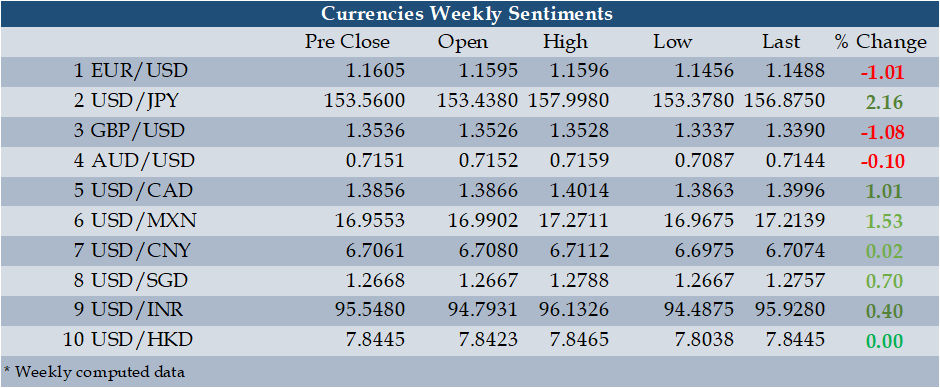
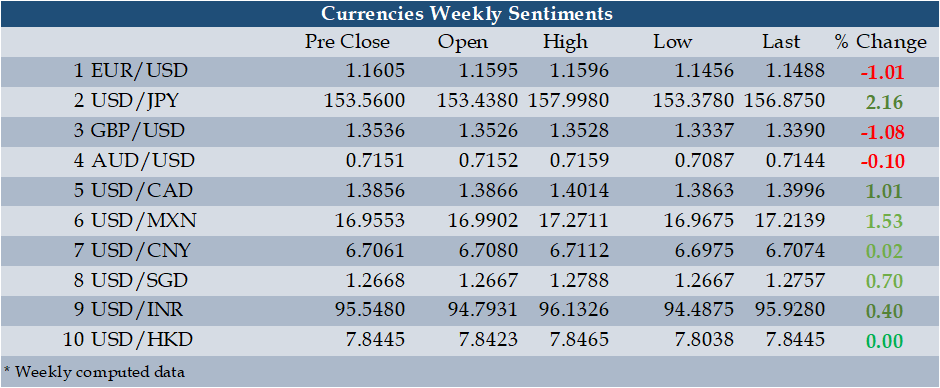
The currency pair revealed the strengthening of USD against other countries currencies. It shows that US is more inert towards current geo political issues or in another sense it is helping them to strategically position them against other countries. The central bank initiative to control inflation from most of the developed countries had really captured the mood of the currency market. The strengthening of USD against Mexican currency might me more of consumption from that region to combat the geopolitical supply shocks. The geopolitical supply shocks is expected to increase the trade between countries that have closer proximity. The flat movement in Indian rupee against USD shows the strengthening of US dollar continue to drive the market sentiments. Active RBI interventions combated the ongoing trend but it become more difficult if foreign equity investors continue to exit for Indian market.
Commodities Market
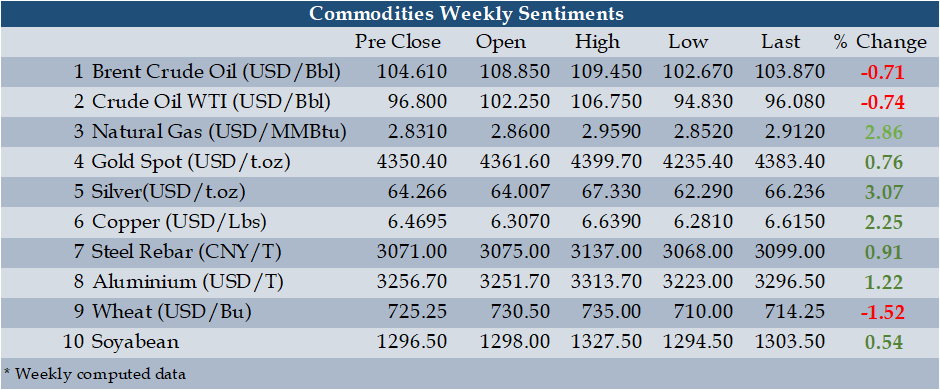
After the sharp rise crude oil prices the commodity showed some tendency to fight against the price inflation. The Saudi Arabia intervention to partially restore flows towards east west pipeline influenced the sentiments. The China request to Iran to curb Houthi rebel drone strikes on regional energy infrastructure also impacted in the market sentiments. Industrial and speculative demand carried away the momentum in silver and the metal appreciated by 3%.
Disclaimer
The views are expressed for the purpose of study only and not an advice to any traders or investors in the market. Trading/investing in Financial markets involves considerable risk and you may lose part or all of the initial investment. It is not ideal for all types of investors, and you are advised to seek professional assistance before the same. The news and views posted on this report are based on information, which are believed to be accurate. The author cannot be held responsible for the accuracy of the content posted on this report or for decisions taken by the readers based on such information.
References